The 52-Minute Focus Rule That Actually Works
You sit down to grind for hours. Three hours in, the words slow. Errors creep in. That afternoon slump hits harder than expected. Most people push through anyway. The brain does not reward that approach.
Research on real worker output found a clear pattern. The most productive people focused intensely for about 52 minutes. Then they stepped away completely for 17 minutes. Not to another screen. A genuine break. A walk. Non-work chat with a colleague. Light movement.
Controlio software surfaces this same rhythm in the activity data it collects today. Controlio tracks when active work peaks and when idle time or app switching rises. Teams that review those logs often see the drop right around the 50-minute mark. The top performers protect the break that follows.
The finding is not new. A few years back Philip Perry laid out the original tracking study and the brain science behind it in clear terms. His Big Think piece still holds up. The numbers and the mechanism have not changed much since.
What Happens Inside Your Head After 52 Minutes
Deep focus burns through mental resources fast. Accuracy slips. Novel connections between ideas slow down. You start rereading the same paragraph without taking it in.
When you finally step away and let the mind drift without input from a screen, the default mode network wakes up. It links past experiences with current problems. It runs quiet simulations about future steps. That background work is where many solutions and creative jumps happen. The so-called aha moments rarely arrive while you stare at the same document.
Pushing past the limit without a real break keeps you in shallow processing mode. Mistakes compound. The extra hour you force often creates more cleanup work later.
Real Breaks Versus Fake Ones
Not every pause counts. Checking email or scrolling feeds during the 17 minutes keeps the brain in the same gear. The recovery stays partial. You get little creative boost.
A proper break looks almost lazy from the outside. Stare out the window. Walk the hallway. Talk about the weather or last night’s game. Light stretching. Low mental load is the goal. That is what lets the background processes run.
Many teams treat the break as another task. They stay at the desk and switch to quick admin. The data shows those people lose the benefit. Output quality stays flat instead of rebounding for the next focused block.
How Elite Performers Already Use This Rhythm
Master chess players analyze in focused bursts and then step away. Professional musicians practice in deliberate segments with recovery built in. Athletes in endurance events plan rest intervals as carefully as the work itself.
Susan Butcher applied the same idea to the Iditarod. She trained her dogs to run four to six hours and then rest the same amount instead of the old twelve-hour grind and rest cycle. She won the race four times. The dogs stayed fresher over the full 1,100 miles.
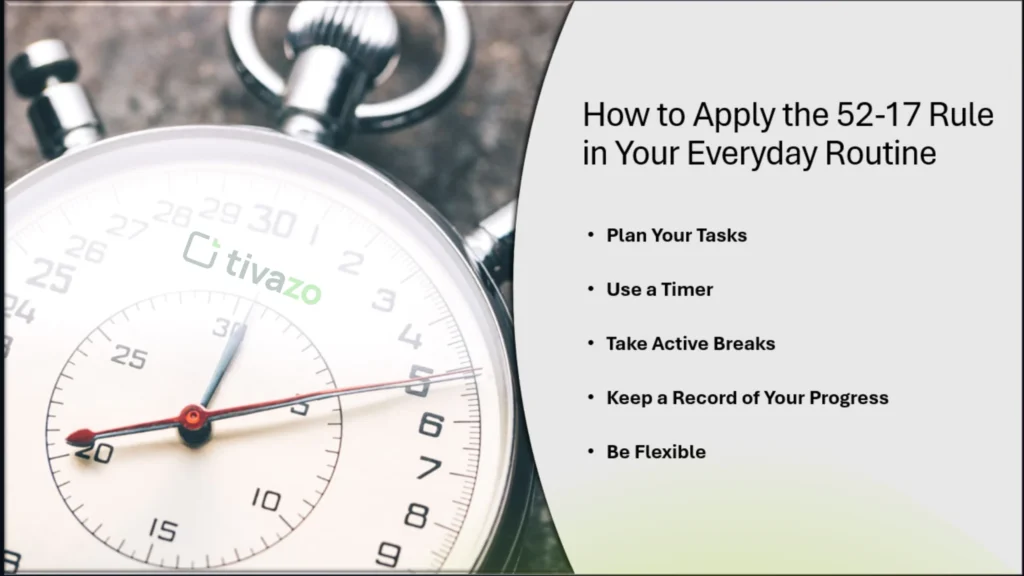
Office work follows the same biology. One important task for 52 minutes. The timer rings. Stand up and leave the workspace if possible. Return when the 17 minutes ends. The next block starts cleaner.
Controlio Makes the Pattern Visible for Teams
Solo workers can use a simple kitchen timer and notice the difference themselves. Distributed teams need data to see what actually happens across people and projects. The Controlio app logs the rise and fall of active time without extra effort from employees. Managers spot where the 52-minute wall appears and whether breaks are being taken or skipped.
Some teams add gentle nudges. After 50 minutes of high activity the dashboard flags a suggested break window. No micromanagement. Just visibility into the natural rhythm the brain prefers. Remote setups in 2026 especially benefit because natural office cues disappeared years ago.
Common Ways People Break the Rule Without Realizing
They set the timer but answer Slack the second it dings. Or they keep one eye on email during the break. The brain never fully disengages.
Others skip breaks entirely on days they feel in flow. Flow feels productive in the moment. The tracking data usually shows rising error rates or shallower output in those extended sessions. The extra time rarely translates to better results by the end of the week.
A few try to shrink the break to five minutes to fit more work in. The research and the activity logs both suggest that shorter pauses do not give the background processes enough runway.
Putting It Into Practice This Week
Pick one recurring deep task. Block 52-minute windows on the calendar and protect them. Set the timer. When it ends, physically move. No screens for the full 17 minutes. Track how the second and third blocks feel compared to your old pattern.
If you run a team, pull the activity reports from whatever tool you use. Look for the natural drop-off point. See who already protects breaks and who grinds straight through. The difference in output quality and error rates often shows up clearly within a week or two.
You do not need to overhaul everything at once. Start with the single most important project on your plate. Run the 52/17 cycle for a few days. Most people notice they finish the work with less total time and fewer fixes needed afterward.
The brain already knows its limits. The teams and individuals who respect those limits get more done with less friction. The data from tools like Controlio simply makes the pattern impossible to ignore.